
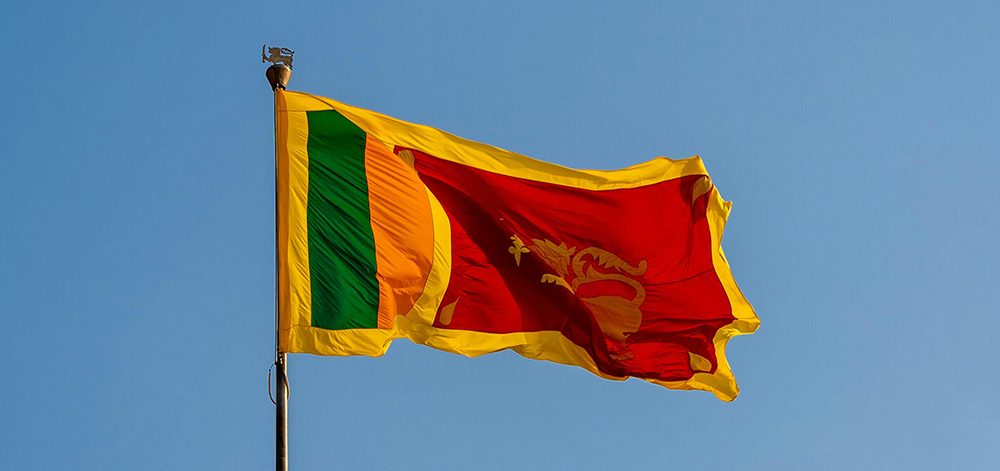
The Sri Lankan-Australian Experience
Written by Sheyan Gunapala (MAPS) | Director & Principal Psychologist, Ascension Psycholoy
I didn’t expect a single moment with my niece to stir so much inside me. She was laughing loud, unfiltered, beautifully herself and something in me paused. Her big blue eyes and fair skin reminded me, in an almost painful way, of how fragile childhood authenticity can be. I found myself silently wondering: which parts of her will she be encouraged to keep, and which parts might she quietly tuck away to belong? That quiet wondering became the seed for this reflection.
As a psychologist, reflection isn’t optional; it’s part of the work. We’re trained to notice patterns, to sit with discomfort, and to uncover the parts of ourselves that quietly shape how we see the world and show up for others. But this reflection isn’t only professional. As someone committed to culturally sensitive practice, I try to understand how culture, identity, and systemic forces shape a person’s distress and coping not through a single dominant lens, but through lived experience.
Experiential Avoidance and the Cultural Mask
Part of being human is experiencing pain, discomfort, and emotional suffering. Yet we are rarely taught how to sit with these experiences or listen to what they might be telling us. In psychology, experiential avoidance refers to the tendency to push away difficult emotions, thoughts, or memories even when doing so causes harm in the long run.
One of the most common ways this shows up is masking: hiding parts of ourselves to feel safe or to belong. For many South Asians in Australia, masking isn’t just a choice; it’s a learned survival strategy.
Growing up Sri Lankan-Australian, I became skilled at wearing a mask. Being “not brown” was somehow seen as cool. There were no South Asian superheroes, no role models in television or film just a handful of cricket players and Apu from The Simpsons. To belong, I changed the way I spoke, how I acted, even what I ate. I stopped bringing curry for lunch. I pretended I didn’t care about schoolwork. I straightened my naturally curly hair. I stopped correcting people when they mispronounced my name (it’s SHAY-AN).
Being told I “wasn’t very Sri Lankan” was framed as a compliment. In reality, it was teaching me which parts of myself needed to stay hidden. Other microaggressions, like “Where are you really from?” quietly reinforced the belief that, fundamentally, I did not belong.
A Systemic Problem
Casual racism and microaggressions are often framed as isolated, individual moments. But they are better understood as symptoms of broader systems. Education, media, workplaces, and even mental health spaces have long centred whiteness as the default subtly teaching us which identities are acceptable, professional, or “normal.” It takes a quick search on social media to see how normalised racism towards South Asians are.
When these systems go unchecked, their values are absorbed and reproduced in everyday interactions. Over time, microaggressions become less about a single comment and more about a cumulative message: that parts of us must be softened, hidden, or translated to belong. This is not an individual failure; it is a systemic one, and its psychological cost is real.
Shame, Masking, and Internalisation
Shame is an emotion rooted in negative self-evaluation. There is a particular kind of shame baked into the experience of being South Asian in Australia. Many clients speak about feeling unlovable or undesirable because of the colour of their skin or the sound of their accent.
Avoiding that shame and masking because of it can help us survive. But survival comes at a cost. Over time, the question shifts from Who am I becoming? to Which version of me is safest here? When safety becomes the goal, self-acceptance, vulnerability, and authenticity can start to feel dangerous.
Eventually, the mask becomes internalised. Messages about what is “acceptable,” “professional,” or “normal” often shaped by whiteness can turn inward, becoming anger, self-criticism, or internalised racism. We begin to believe that some parts of ourselves are simply not enough.
The Cost on Mental Health
Avoiding parts of ourselves, our emotions, our culture, our identity has a real psychological cost. Research consistently shows that experiential avoidance increases the risk of anxiety and depression. For South Asians, avoiding shame tied to cultural identity can intensify these struggles.
We also know that people from culturally and linguistically diverse backgrounds in Australia often access mental health services later, sometimes when distress has become more severe. Avoidance may help in the short term, but in the long term, it erodes our sense of self.
What’s Helped Me
Some practices that have helped me, both personally and professionally, include:
- Mindful Awareness: Gently noticing when I’m judging or hiding parts of myself, and naming it without shame. Even acknowledging, “I’m noticing I’m masking right now,” can be powerful.
- Self-Compassion: Speaking to myself as I would to a loved one or a child. Meeting shame with kindness instead of criticism.
- Values Clarification: Asking, Which parts of myself do I want to honour? and letting those values guide my choices.
- Gradual Exposure: Expressing previously hidden parts of myself in safe spaces—correcting my name, sharing cultural traditions, or speaking from my own perspective.
- Therapeutic Support: Approaches like Acceptance and Commitment Therapy (ACT) and Schema Therapy have been especially helpful in processing internalised shame and integrating all parts of the self.
The antidote to shame is to shine a light on it. I am incredibly lucky for the amazing people in my life who allow me to be me. I’m far from perfect and to be perfectly honest, I feel like a fraud even speaking about this experience. I still wrestle with which parts of me are masks and which parts are truly me. I’ve even been called a “coconut” by other South Asians brown on the outside, white on the inside.
But reflection has helped me begin accepting myself: the parts I once hid, the parts I was taught to feel ashamed of, and the parts that simply exist. I’m learning to separate the beliefs I inherited from societal pressures from the ones I want to keep. I’m learning to live according to my values to show up as myself, even when shame is present. It’s a slow, ongoing process of uncovering, accepting, and integrating all parts of who I am.
Why This Matters
I think of my niece again. Being Sri Lankan-Australian often means holding multiple truths at once navigating different worlds, languages, expectations, and hopes. Accepting all parts of yourself and living in alignment with your most authentic values is difficult. But it is radical, courageous, and deeply necessary.
If these words resonate with you, know this: you do not have to carry it alone. Embracing who you are is not a weakness it is reclaiming yourself. Straighten less. Embrace your accent. Savour your ethnic food. Start loving every part of yourself. And if you need support along the way, we are here to walk beside you.
